The idea of “clean air” indoors has shifted. Homes look sealed, quiet, efficient. Yet the air inside often carries more chemical residue, biological matter, and ultrafine debris than many outdoor environments. That tension sits at the center of the air purifier conversation in 2026. Homeowners are no longer just filtering dust. They are managing long term exposure to compounds that were barely discussed a decade ago.
Buying guides built around filters and room size feel dated because the problem has changed. Materials off-gas longer. Urban air infiltrates more easily. Wildfire smoke behaves differently from pollen. Viruses and mold do not follow predictable cycles. This guide is meant to help homeowners decide what the best air purifier in 2026 actually means for their living space, without selling shortcuts or leaning on marketing claims.
What Pollutes Indoor Air in Modern Homes
Indoor air pollution rarely comes from one source. It layers over time.
Volatile organic compounds enter from furniture, cabinetry, flooring, paint, and cleaning agents. Many persist for years, not weeks. PM2.5 and ultrafine particles drift in from traffic, generators, cooking oils, and wildfire smoke. They are small enough to remain suspended for hours.
Moisture creates another problem. Mold spores and fungal fragments spread quietly through HVAC systems and wall cavities. Bacteria and airborne viruses can circulate through enclosed rooms, particularly overnight. Pet dander, allergens, and chemical fumes from daily activities round out the mix. Air may look clear. That does not mean it is biologically or chemically neutral.
Why Choosing the Right Air Purifier Matters More Than Ever
Short term exposure is only part of the picture. It appears that chronic, low level exposure has a cumulative effect on sleep quality, immune response, and cognitive clarity. Clean looking air can still carry ultrafine pollutants that pass deep into the lungs.
Continuous exposure matters more than occasional events. Bedrooms, nurseries, and home offices see hours of uninterrupted breathing. That is where the difference between intermittent cleaning and continuous purification becomes meaningful.
Key Factors to Consider Before Buying an Air Purifier in 2026
Room Size and Airflow Without the Hype
CADR still matters, but only within limits. It measures how fast a device moves air through a filter, not what happens after capture. Ceiling height and open layouts often reduce real effectiveness. Slight oversizing tends to perform better, especially when doors remain open.
Pollutant Type You Need to Address
Particles, gases, and biological contaminants behave differently. No single metric covers all three. A purifier that excels at dust may do very little for VOCs or viruses.
Continuous Operation Versus Intermittent Cleaning
Many systems perform well when filters are new. Performance drops as saturation builds. Continuous systems that do not rely solely on media replacement are becoming more relevant, particularly for bedrooms and long occupancy spaces.
Air Purifier Technologies Explained in 2026
Homeowners encounter a confusing mix of technologies.
HEPA filtration remains effective for larger particles. Carbon filtration addresses odors and some gases, though capacity is finite. UVGI and photocatalytic oxidation target microbes but may create byproducts. Ionic and ozone based systems raise safety concerns in enclosed spaces.
Hybrid and bio based systems attempt to combine capture and neutralization. Not all approaches are equal. Ultrafine particles, VOCs, and biological contaminants demand different responses.
Air Purification Technology Comparison: What Actually Works
A useful way to evaluate systems is by looking beyond capture alone.
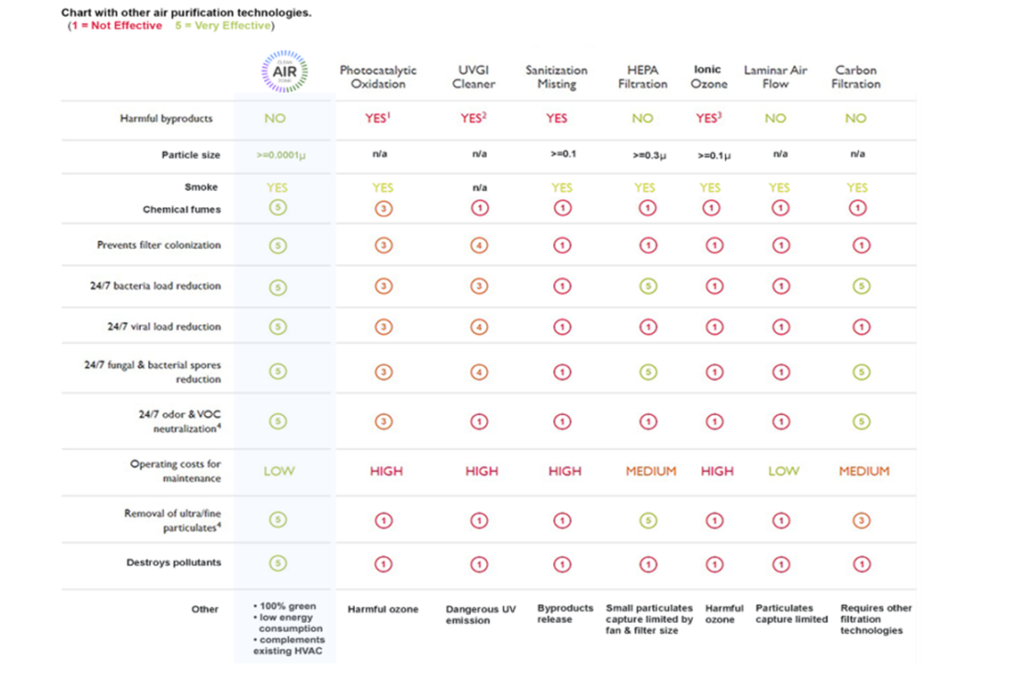
CleanAirZone systems differ in that they combine continuous capture with biological digestion, without producing harmful byproducts. Compared to filtration only or ozone producing systems, this approach addresses a broader range of pollutants over time.
In simplified terms:
According to the manufacturer, CleanAirZone removes particles down to 0.0001 microns, neutralizes VOCs and odors, and reduces bacteria, viruses, and mold continuously with low maintenance. HEPA filters capture particles but do not destroy them. Ozone and UV based systems introduce secondary risks. Carbon works until it does not.
CADR alone cannot explain these differences. The distinction between capturing pollutants and destroying them matters, especially in bedrooms and homes with children.
What Makes an Air Purifier Truly Effective in 2026
Effectiveness now means several things working together.
Ultrafine particle removal matters as much as visible dust. VOC neutralization must occur without releasing secondary compounds. Biological load reduction should be continuous, not event based. Harmful byproducts are increasingly unacceptable. Maintenance and energy use factor into long term performance. Verified testing separates credible systems from noise.
Understanding Next Generation Air Purification Systems
Beyond filters and UV, newer systems rely on a two step concept.
First, airborne pollutants are electrically captured, including particles too small for traditional media. Second, those pollutants are digested in a water based bioreactor using enzymes and microorganisms. Oxidation occurs without residue.
System integrity matters here. Replace the biology or reactor design, and performance collapses. This is why not all bio based claims hold up under testing.
Scientific Validation and Real World Performance
Laboratory results alone are not enough. Performance in schools, hospitals, nursing homes, and fire departments tells a clearer story.
CleanAirZone systems have been evaluated against coronavirus, wood smoke, mold spores, Legionella, and H1N1. Studies document reductions in PM2.5, VOCs, and airborne bacteria in real buildings. Reports from immunology and microbiology institutes add credibility that marketing language cannot replace.
Best Air Purifier Choice by Home Type
Bedrooms and nurseries benefit from quiet, continuous purification with no byproducts. Living rooms and open layouts require broader airflow coverage. Homes with pets need systems that manage both particles and odors. Wildfire prone areas demand ultrafine particle control. Urban apartments face constant infiltration. Allergy and asthma sensitive households should avoid ozone entirely.
There is no single best air purifier for home use in every scenario. Context matters.
Common Mistakes Homeowners Make
Buying based only on room size remains common. Ignoring VOCs and biological contaminants limits results. Filters are over trusted. Ozone producing devices still enter homes despite warnings. Quiet operation is mistaken for effectiveness.
Sustainability and Environmental Impact
Disposable filters create waste. Energy consumption adds up. Chemical byproducts linger. Systems that operate continuously without consumables are gaining preference, not for ideology, but practicality.
CleanAirZone aligns with this shift by using a 100 percent green, low energy approach that avoids waste and secondary emissions. That benefit tends to matter more over the years than the weeks.
Are Smart Air Purifiers Worth It in 2026
Sensors provide information but do not remove or fix problems. Automation helps adjust fan speed, but it does not change underlying chemistry or biology. Smart features are useful when paired with effective purification. Alone, they offer reassurance more than protection.
How to Make the Final Decision
First, identify the main pollutants. Choose technology based on its effectiveness against those contaminants, not on brand claims. Ensure it operates safely and continuously, and confirm its performance in real-world settings before making a decision.
If you are comparing options for your own space, reviewing independent performance data before purchase can prevent expensive missteps.
Final Thoughts: Choosing the Best Air Purifier for the Future
The best air purifier in 2026 is defined less by filters and more by long term impact. Performance, safety, and sustainability now carry equal weight. Buyers who think beyond short term metrics tend to breathe easier later. The question is whether most homes are ready to make that shift yet.
FAQs
Is a HEPA filter enough for home air quality?
HEPA captures particles but does not neutralize gases or microbes.
Are ozone based air purifiers safe?
Most experts advise against ozone in enclosed residential spaces.
Do air purifiers help with mold
Some reduce airborne spores. Few address ongoing biological growth effectively.
Is CleanAirZone suitable for residential use?
The CAZ Mini is designed for homes up to 200 square feet and operates without filters or waste.
What makes the best air purifier in 2026 different from earlier models?
It addresses ultrafine particles, VOCs, and biological contaminants continuously without harmful byproducts.